
World Summit on the Information Society 2026
AI and Energy for Sustainable Digital Development: Governance, Infrastructure, and Global Cooperation — an interactive session hosted by the EnergyPact Foundation at the ITU WSIS Forum 2026.
Co-hosted by:



WSIS Action Line Facilitators




















About the WSIS Forum
The WSIS Forum serves as the central multistakeholder convening platform mandated to advance the implementation of the WSIS Action Lines and support global digital cooperation. Anchored in the renewed UNGA mandate, the Forum brings together governments, the private sector, civil society, technical communities, academia, youth, and international organizations in a uniquely inclusive environment for dialogue, collaboration, and action.
As part of the WSIS+20 review process, the United Nations General Assembly recognized the central role of the WSIS Forum as a global platform for advancing the WSIS vision. Through resolution A/RES/80/173, the General Assembly acknowledged the work of ITU, in collaboration with UNESCO, UNCTAD and UNDP, in establishing the annual WSIS Forum.
The Forum remains the principal mechanism for reviewing, gathering multistakeholder input and advancing the WSIS Action Lines, including their annual roadmaps. The International Telecommunication Union leads the coordination of the event, co-organized by ITU, UNESCO, UNDP and UNCTAD, in partnership with more than fifty United Nations entities.
A defining component of the Forum is its High-Level Track, which convenes ministers, regulators, chief executives, civil society heads, mayors, ambassadors and heads of UN agencies. The ministerial roundtables give Member States an opportunity to articulate national digital priorities, exchange policy experiences, and identify areas for collective action.
The Forum has established itself as a global hub for innovation, emerging trends and forward-looking discussions — artificial intelligence, frontier connectivity, digital public infrastructure, cybersecurity, digital inclusion and multilingual digital ecosystems — while providing a structured space to examine emerging risks such as online safety, misinformation, data governance and widening digital divides.
Agenda & Programme
WSIS Forum 2026 ran over five days in Geneva — 6–7 July at ITU Headquarters and 8–10 July at Palexpo. See where the EnergyPact session sat in the week, and what the panel concluded.
Explore on the official WSIS Forum site
The EnergyPact Session
AI and Energy for Sustainable Digital Development
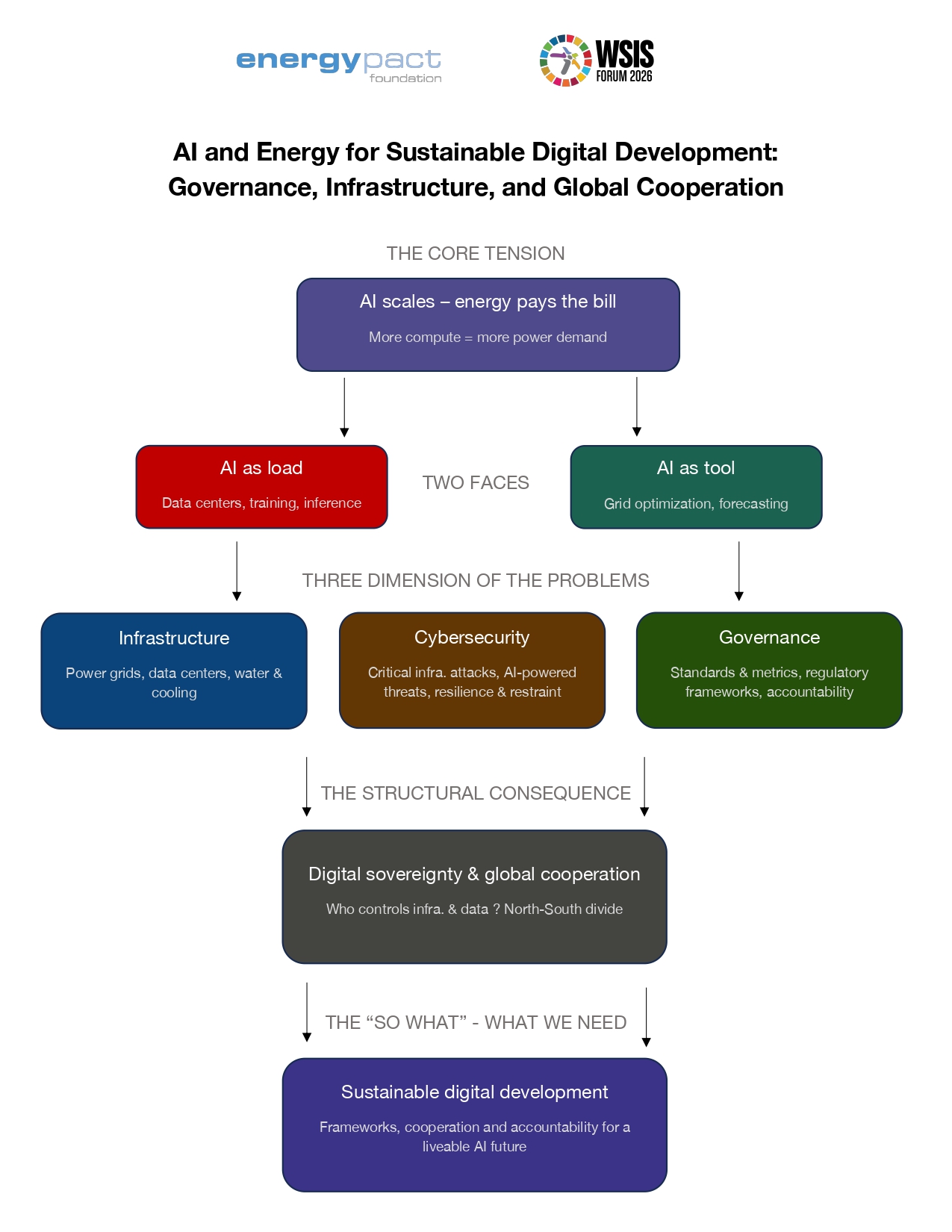
Artificial intelligence is reshaping global computing demand and is putting unprecedented pressure on power grids, water resources, and energy infrastructure worldwide — while simultaneously offering tools to optimize the very systems that power it. This session, hosted by the EnergyPact Foundation at the ITU WSIS Forum 2026, examines that paradox across five dimensions: the core tension between AI as load and AI as tool, the physical cost of infrastructure under strain, the fragility created by uncritical deployment, the governance frameworks needed to make externalities visible and accountable, and the question of digital sovereignty in a world where compute, energy, and platform control are concentrated in the hands of a small number of players.
The conversation starts here. The work is only beginning.
When: Thursday, 9 July 2026 · 17:00–17:45 CEST
Where: Room E, Palexpo, Geneva — physical and remote participation
The Session Framework
High-Level Programme
Leaders TalkX
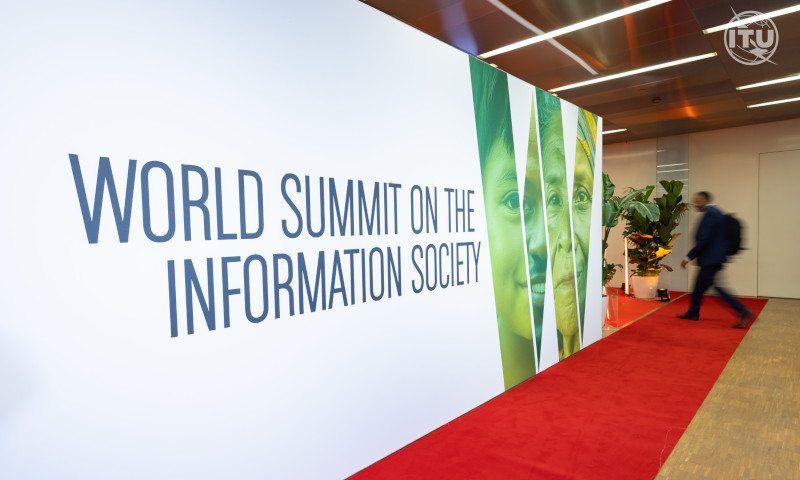
The Leaders TalkX sessions gathered high-ranking officials of the WSIS stakeholder community, representing the Government, Private Sector, Civil Society, Academia, Technical Community and International Organizations. These high-level exchanges provided a strategic space for leaders to reflect on the WSIS outcomes review, share national and institutional perspectives, and shape forward-looking policy dialogue. Aligned with the evolving digital landscape and the WSIS Action Line implementation annual review, the Leaders TalkX sessions also addressed new and emerging technologies and their implications for sustainable development.
Learn moreForum Chair
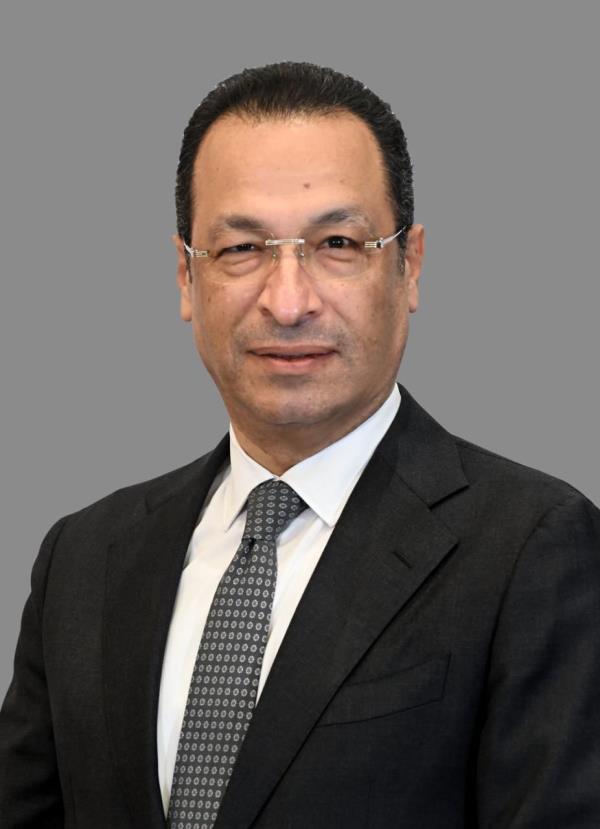
H.E. Eng. Raafat Hendy
Minister
Ministry of Communications and Information Technology
Egypt (Arab Republic of)
Forum Highlights
Alongside the session programme, WSIS Forum 2026 ran its prizes, contests and special tracks.
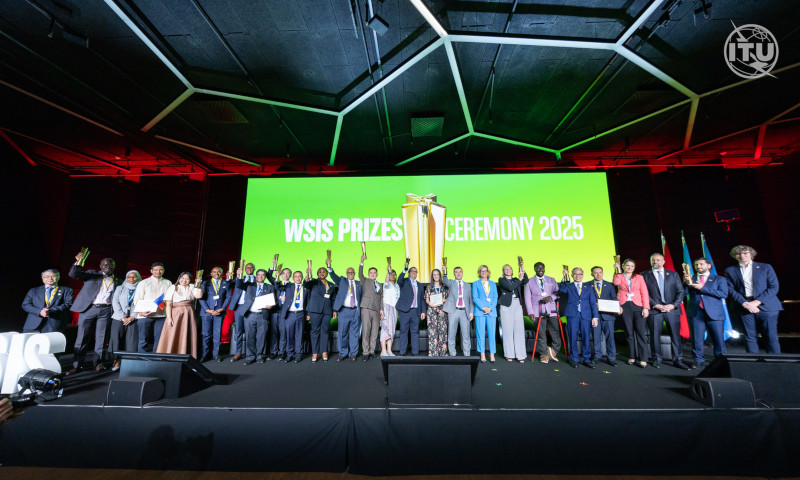
WSIS Prizes 2026
The WSIS Prizes 2026 received nearly 1,600 submissions from over 120 countries. The Winners Ceremony recognized 18 winning projects selected from among the 90 Champion projects representing the most voted and impactful initiatives in each category.
Learn more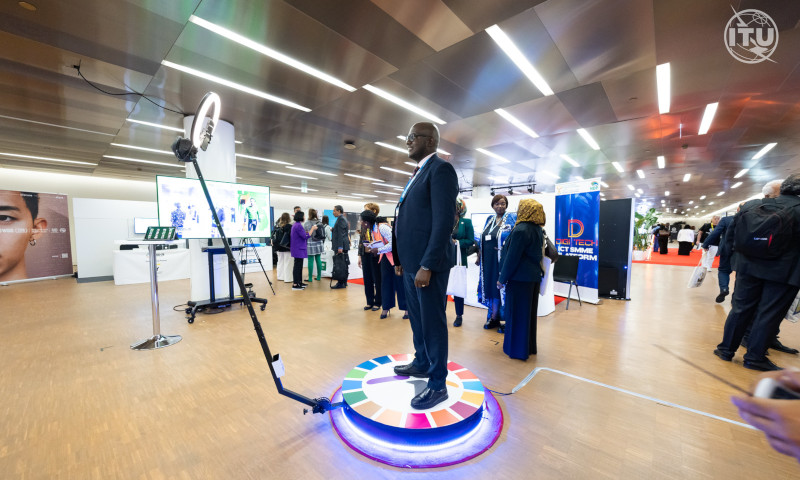
Photo Contest
The WSIS Photo Contest 2026 received a record-breaking 465 submissions demonstrating the role of ICTs in sustainable development from stakeholders around the world. 151 finalists were recognized for their visual storytelling and 10 winning entries selected from among the finalists.
Learn more
iSAFE Hackathon 2026
The iSAFE Hackathon 2026 is a global innovation challenge designed to harness the power of technology and generative artificial intelligence to address emerging threats in online environments, empower digital citizens, and strengthen trust in digital systems.
Learn more
Special Track on Women and Girls
The WSIS Process reaffirms that empowering all women and girls, and ensuring their full, equal and meaningful participation in the digital space, is vital to closing the digital divide and advancing sustainable development. WSIS remains committed to a 50/50 participation balance through its Special Track on Women and Girls.
Learn more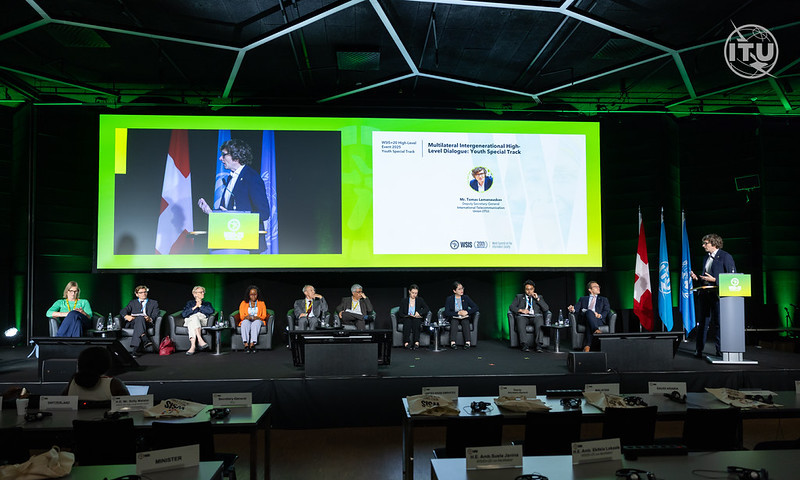
Special Track on Youth
The Youth Special Track brought together young leaders from around the world through a series of youth-led sessions and dialogues.
Learn moreFive Dimensions of the Paradox
AI as load, AI as tool
The core tension: the same technology driving an unprecedented surge in electricity demand is also the most powerful instrument available for optimising and decarbonising the systems that power it.
Infrastructure under strain
The physical cost of scale — pressure on power grids, water resources for cooling, and the siting and financing of the data-centre capacity behind every model.
Deployment fragility
The fragility created by uncritical deployment, where systems are adopted faster than the resilience, redundancy and degraded-mode operation needed to depend on them.
Governance & accountability
The governance frameworks needed to make externalities visible and accountable — measurement, disclosure and standards that turn energy and water footprints into governed quantities.
Digital sovereignty
The question of sovereignty in a world where compute, energy, and platform control are concentrated in the hands of a small number of players.
Panellists

Mr. Massimo Rodella
Secretary-General
EnergyPact Foundation, Switzerland
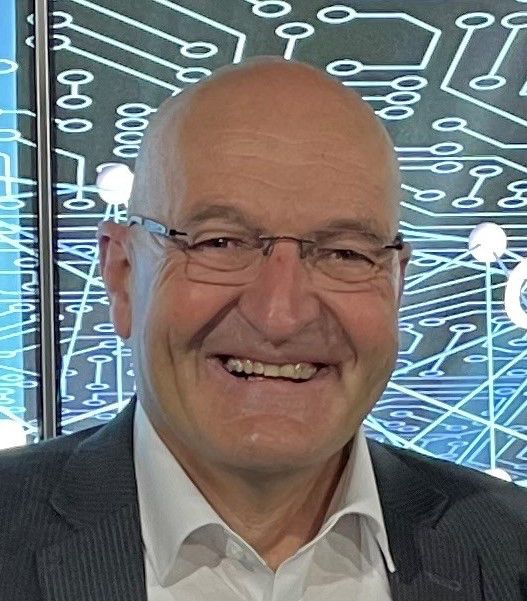 Moderator
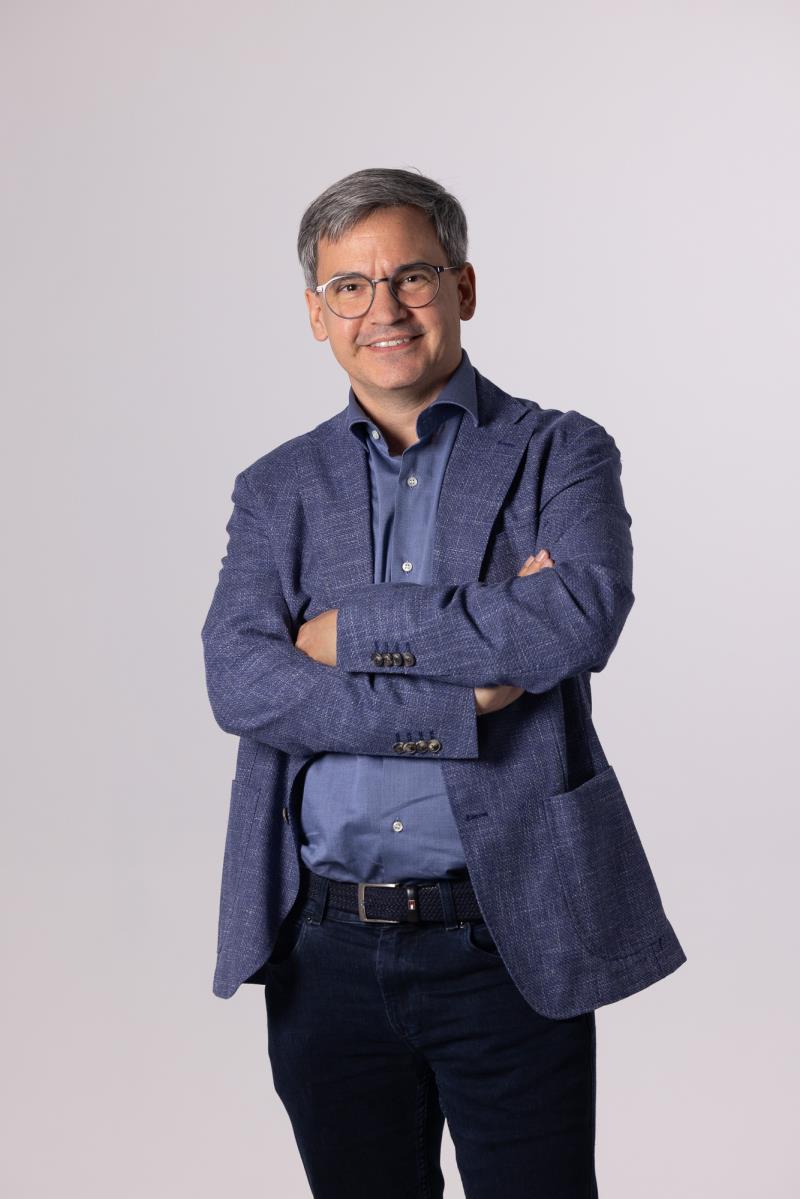
Mr. Gérald Vernez
Founder & Chairman
digiVolution Foundation, Switzerland
Dr. Daniel Fasel
Founder & CEO
Navique SA, Switzerland

Ms. Susanne Emonet
Co-Founder
Soveris, Germany
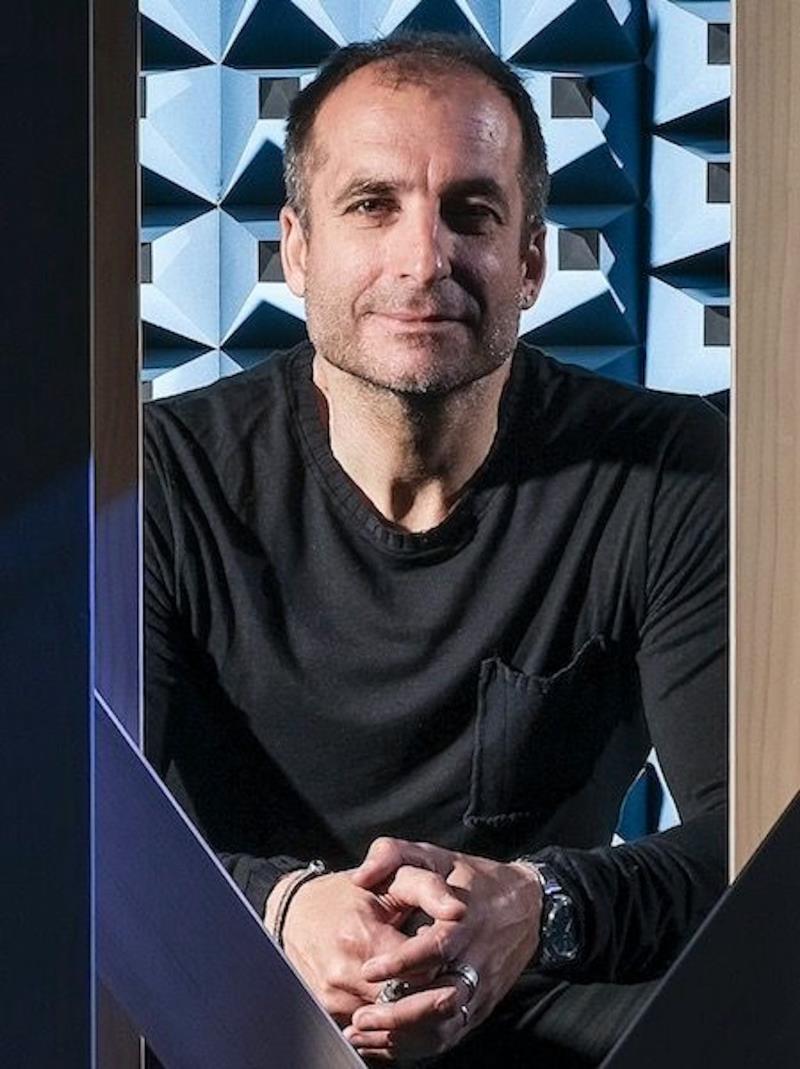
Dr. Quentin Ladetto
Research Director – Technology Foresight
armasuisse Science & Technologies — Federal Department of Defence, Switzerland
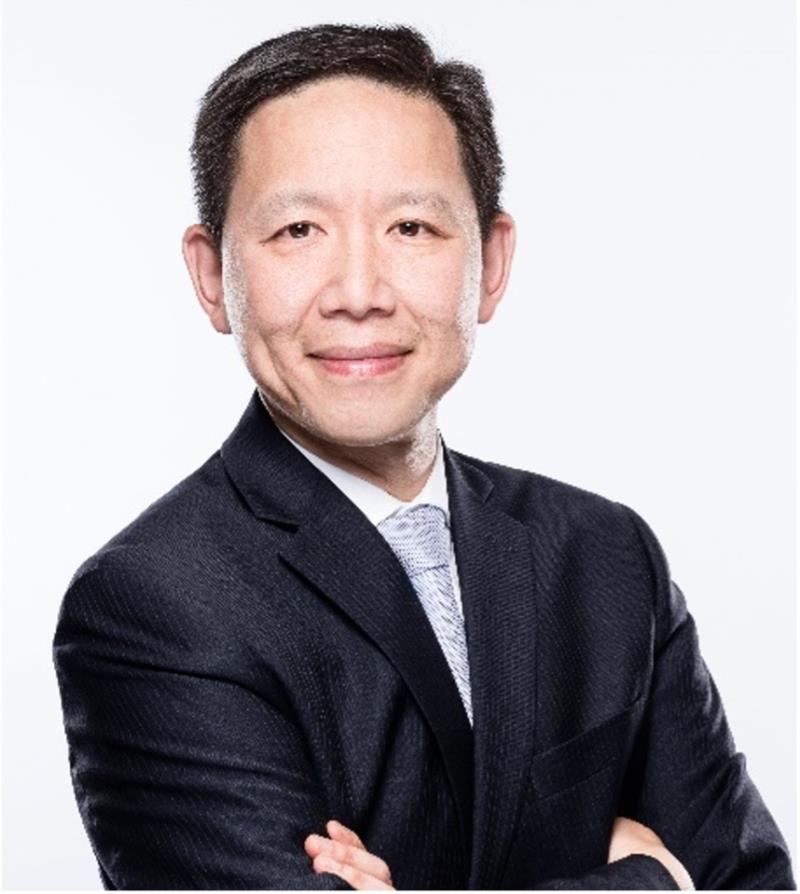
Mr. Paul Wang
Senior Executive
ICON.ngo, Switzerland
Session Documents
Outcome Document — Session 421
Official WSIS outcome document capturing the session's conclusions and recommendations.
PDFSession Concept Note
EnergyPact session brief — AI and Energy for Sustainable Development.
PDFEnergyPact Presentation — WSIS 2026
Foundation presentation delivered during the WSIS Forum 2026 in Geneva.
PDFSession Presentation
Panel deck — AI and Energy for Sustainable Digital Development.
PDFWSIS Forum 2026 Partners
Diamond Partner

United Arab Emirates
Platinum Partner

Malaysian Communications and Multimedia Commission
Gold Partner

Kingdom of Saudi Arabia
Silver Partners

Japan

Nigeria
Innovation Partner

IEEE
Supporting Partners

Wallonia-Brussels, Belgium

Republic of Korea

Rwanda

United Kingdom

Afnic

Global SDGs and Leadership Development Center · UNITAR

IFIP

ICANN

Internet Society